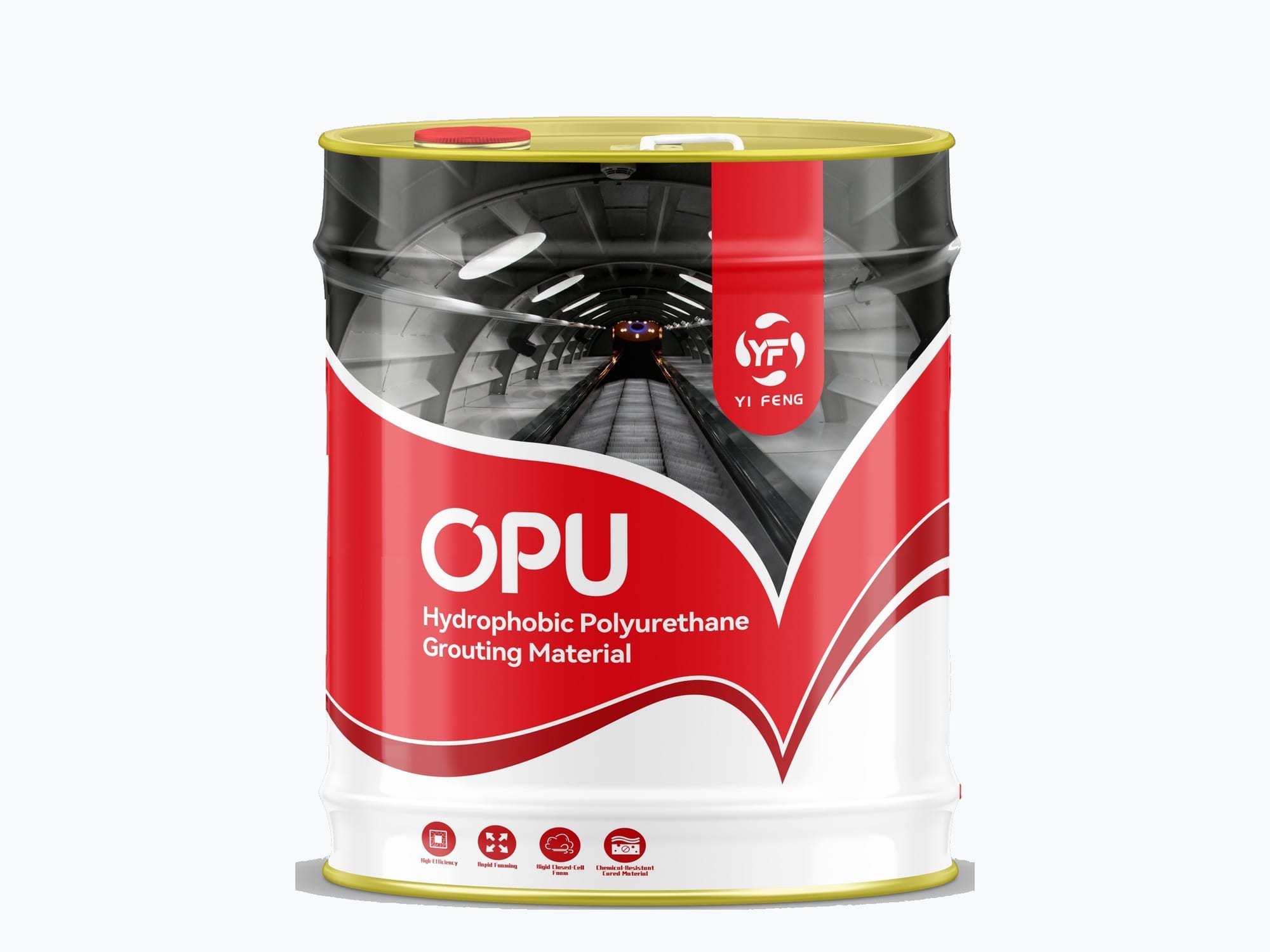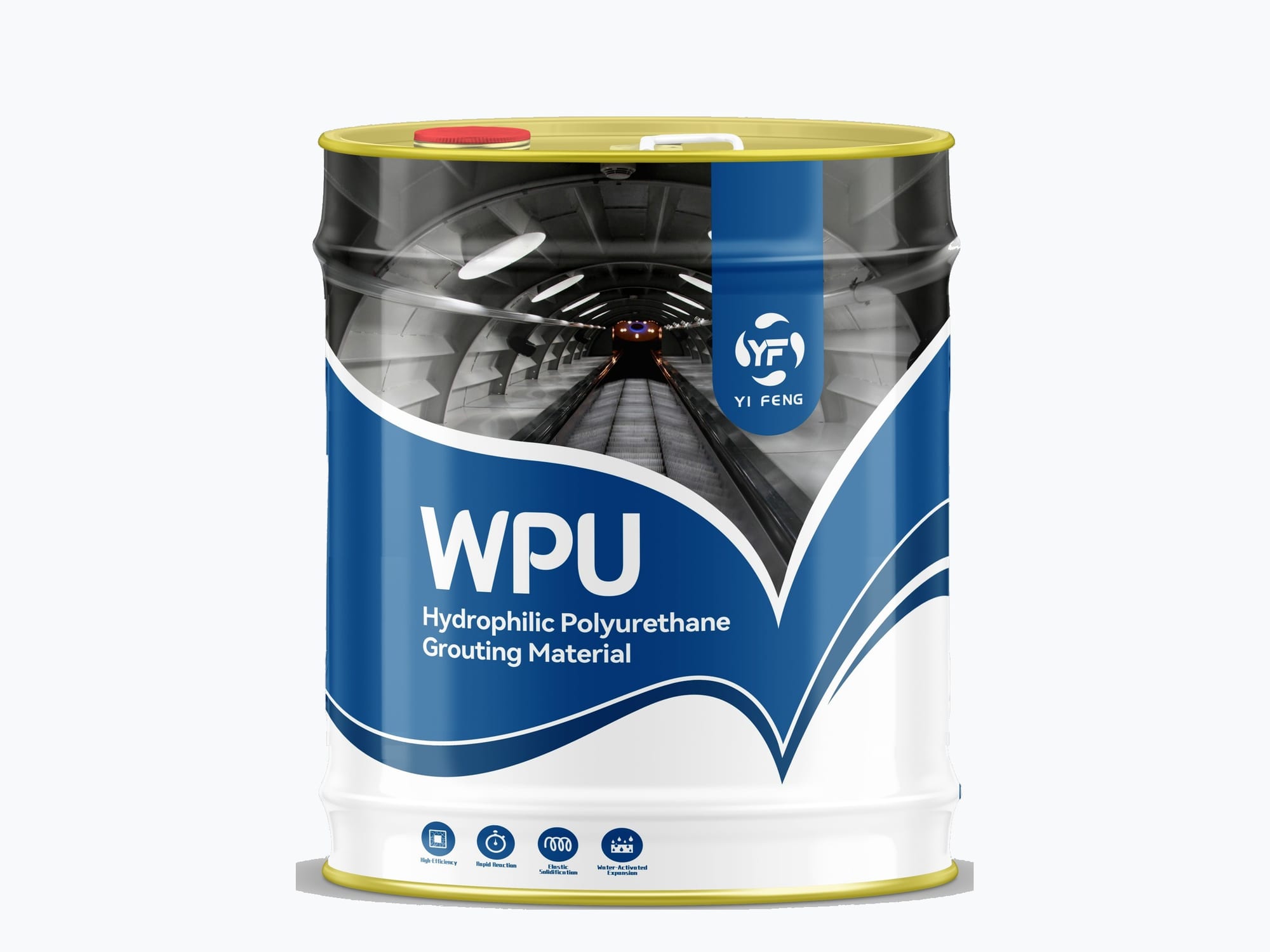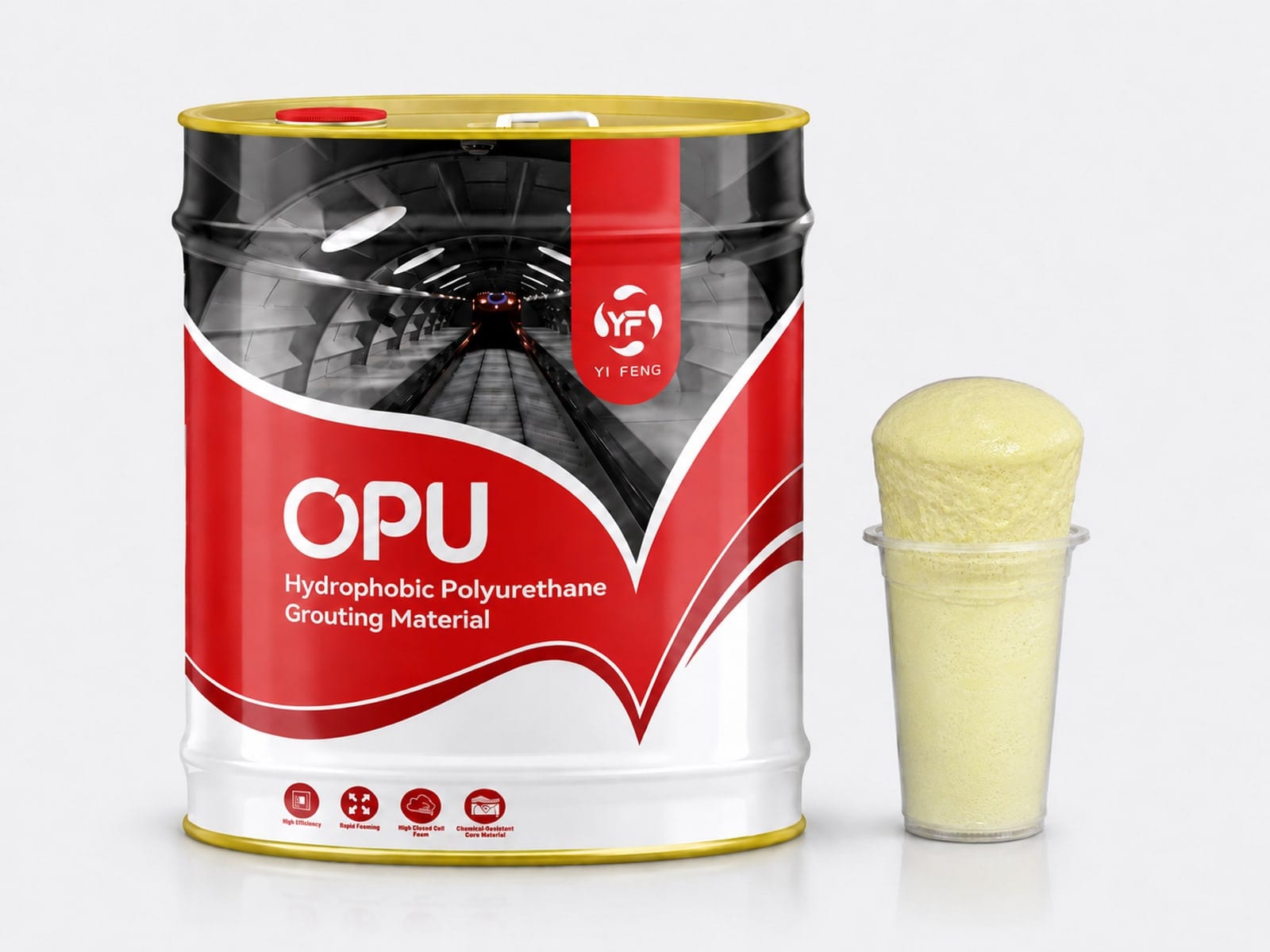
These two PU grouts look similar in the drum but behave fundamentally differently after injection. Choosing wrong wastes material and risks repeat leakage. Use this guide to match the chemistry to the site condition.
Side-by-side comparison
| Criterion | Hydrophobic (oil-based) | Hydrophilic (water-based) |
|---|---|---|
| Cured structure | Rigid closed-cell foam | Flexible elastic gel |
| Volumetric expansion | 8–15× | Absorbs water ~200% by weight |
| Reaction time | Seconds | 1–3 minutes |
| Best leakage type | Active flowing water | Slow seepage, capillary moisture |
| Substrate movement | Rigid — fails under deformation | Elastic — accommodates joint movement |
| Cold-weather tolerance | Better | Slower reaction below 5°C |
| Typical cost per kg | Lower | Higher |
| Common uses | Tunnel leak stoppage, pipe-through-wall | Movement joints, long-term seepage zones |
How hydrophobic polyurethane works
Hydrophobic (oil-based) PU prepolymer repels water but reacts with it. When it contacts water in a crack, the reaction releases CO2 — this is what creates the rapid, visible foaming on site. The expanded foam is rigid, closed-cell, and acts as a physical plug with structural support against hydrostatic pressure.
- Reacts within seconds of water contact
- Forms a rigid closed-cell foam structure
- 8–15× volumetric expansion fills cavities
- Strong physical plug — stops moving water immediately
- Chemical-corrosion resistant once cured
For current technical specs, see Hydrophobic Polyurethane Grout.
How hydrophilic polyurethane works
Hydrophilic (water-based) PU prepolymer is water-attracting. Instead of foaming aggressively, it absorbs water and cross-links into a flexible elastomeric gel. The cured material can absorb additional water during service — making it self-healing under wet/dry cycles and ideal for joints that move.
- Absorbs water rather than just reacting violently with it
- Cures into an elastic, flexible gel
- Accommodates substrate deformation and joint movement
- Self-healing behavior under wet/dry cycling
- Long-term performance in capillary-moisture environments
See Hydrophilic Polyurethane Grout for current specs.
Decision tree
- Is the leakage active running water? → Use hydrophobic to stop it first.
- Is the crack a movement joint or in a structure that flexes? → Use hydrophilic for long-term performance.
- Is the crack in a load-bearing structural member that you also need to reinforce? → Stop water with PU first, then inject epoxy for structural repair.
- Are you doing a continuous water-stop curtain (e.g., behind a tunnel lining)? → Consider acrylate grout for large-area continuous coverage.
Combined-system jobs
Real engineering sites often need both. A common sequence: inject hydrophobic PU first to stop the active leak, then come back and inject hydrophilic PU into the same area as a redundant secondary seal that handles long-term moisture and structural movement. This belt-and-braces approach is standard practice on metro tunnel and basement repair projects.