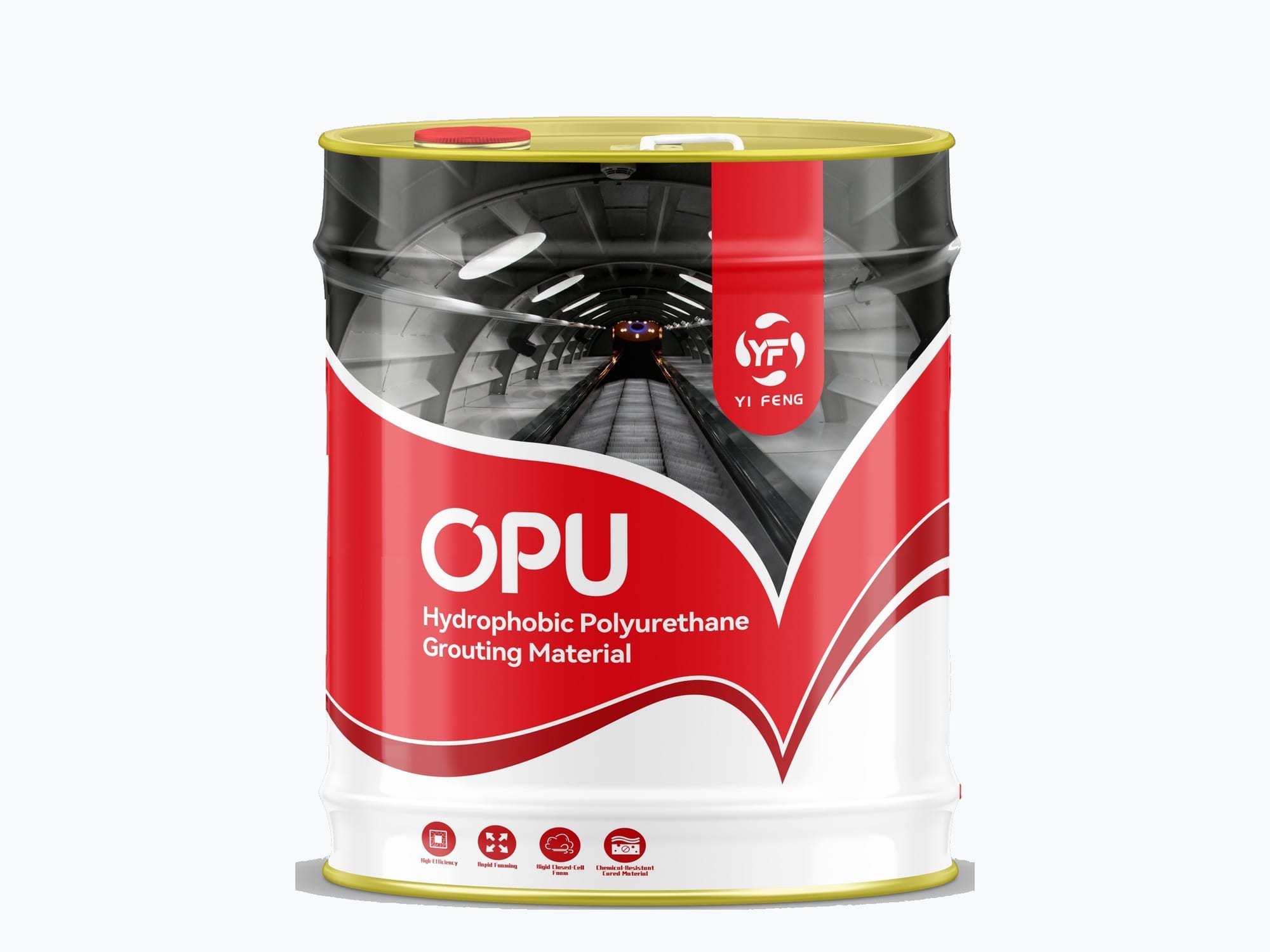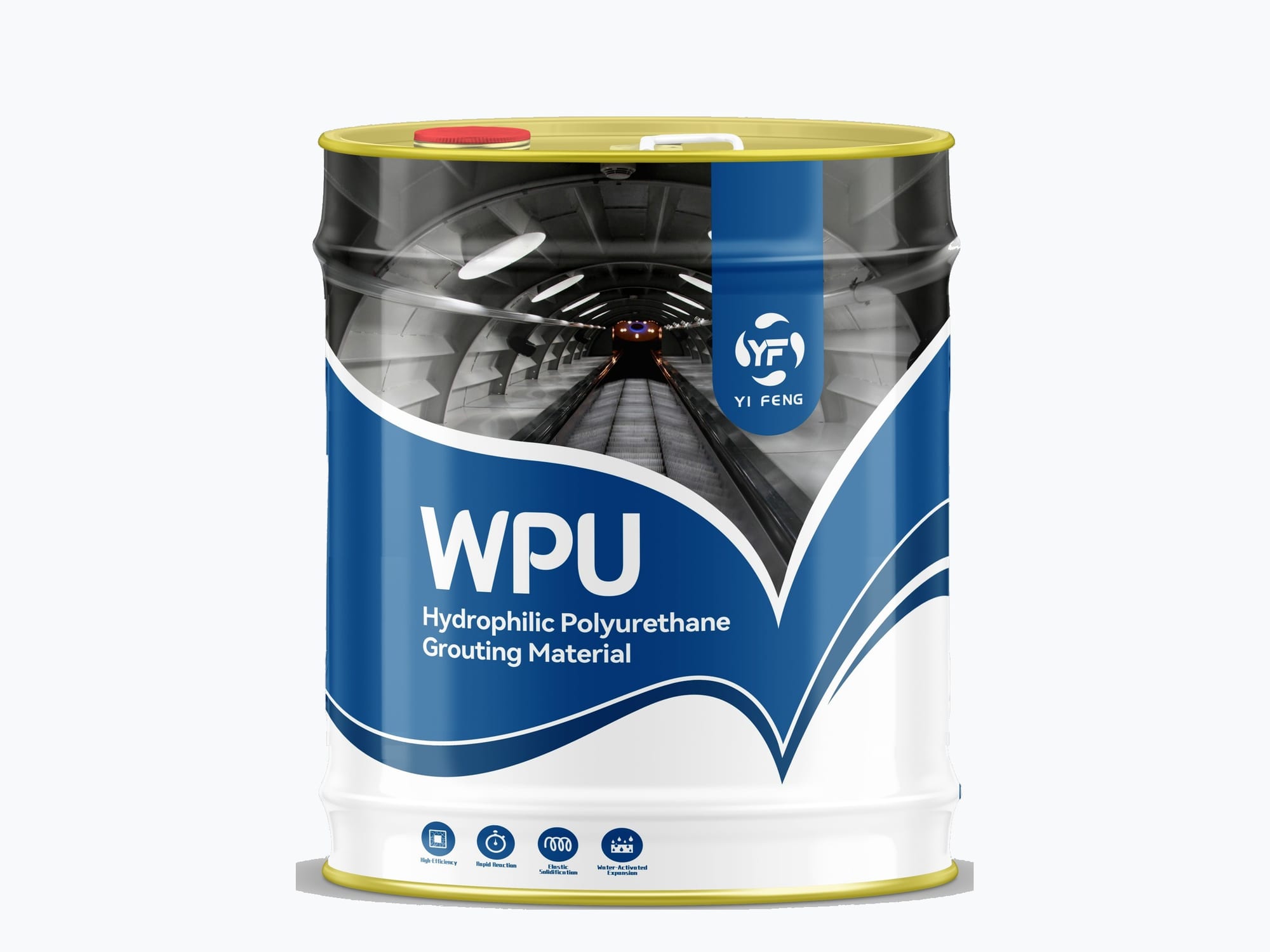
Polyurethane (PU) chemical grouting is one of the most widely deployed leak-stoppage technologies in underground construction. This guide explains what it is, how the chemistry works, when to use it, and how it relates to the two functional sub-types — hydrophobic (oil-based) and hydrophilic (water-based) — that you'll see on every spec sheet.
How polyurethane grout works
When low-viscosity polyurethane prepolymer is injected into a wet crack or joint, it reacts with water in the substrate. The reaction releases CO2 and the prepolymer expands into either a foam or a gel — depending on the formulation — that fills the void and bonds to the surrounding concrete.
The reaction begins within seconds of water contact and is typically complete within 1–5 minutes. Final mechanical strength develops over 12–24 hours, depending on temperature and humidity at the substrate.
Two families: hydrophobic vs hydrophilic
Polyurethane grouts come in two functionally different families. Choosing between them depends on the state of the water (active flow vs long-term moisture) and the movement of the substrate (rigid vs flexing) — not just leakage volume.
| Property | Hydrophobic (oil-based) | Hydrophilic (water-based) |
|---|---|---|
| Cured form | Rigid closed-cell foam | Flexible elastic gel |
| Expansion ratio | 8–15× volumetric | Absorbs water ~200% by weight |
| Best for | Active running leaks | Long-term seepage, moving joints |
| Substrate movement | Rigid — best on stable structures | Elastic — accommodates movement |
| Reaction speed | Very fast (seconds) | Moderate (1–3 min) |
For a deeper selection guide see Hydrophobic vs Hydrophilic Polyurethane: How to Choose.
Where polyurethane grouting is used
- Tunnel and subway lining leakage repair
- Basement and underground structure waterproofing
- Construction joint and pipe-through-wall sealing
- Concrete crack water stoppage
- Diaphragm wall sealing
- Earth-retaining structure infiltration control
How it differs from epoxy injection
Polyurethane grouting is not a structural repair material. Its primary job is stopping water, not restoring load-bearing capacity. For non-moving cracks in dry concrete where structural integrity must be restored, epoxy injection grout is usually the right tool — see Epoxy vs Polyurethane Injection for Concrete Cracks.
Equipment required
- High-pressure injection pump (single or dual-component)
- Mechanical or hydraulic injection packers sized to the crack
- Drill, hammer, hose set
- PPE — gloves, goggles, and ventilation when working with uncured prepolymer